CORN ON THE COB 
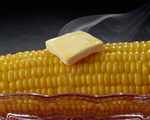
If there is anyone out there who
doesn't love corn on the cob, I have not met the person. One of the things we
look forward to most about the summer harvest is the sweet corn that comes out
of the field in the morning and makes its way to the dinner table the same day.
I have picked corn many times and I can never resist eating some raw, right
there where I stand between the rows. That is the ultimate treat. However, it
is equally delightful, though somewhat decadent, to smother hot cobs with
butter and drip it all the way from plate to mouth.
Corn comes in many varieties, from
sweet to sweeter to super sweet, from white to yellow to a combination of both.
And now it is available all year long due to the newest varieties that hold up
for longer periods of shipment. It can be frozen when first harvested and is
almost as delicious as fresh. If there is any drawback to corn it is how many
people cook it.
No matter what method you use to
cook your corn, never overcook it. Corn at its best is very milky inside and
should retain that moisture when heated. If overcooked, it will dry out
quickly. Also, despite what you were taught, never salt corn before cooking.
Salt pulls out moisture from any food and, again, the corn will dry out when
cooking. Some people like to add a little sugar when boiling corn. I do that
too, although there are some varieties of corn that are so sweet it isn't
necessary.
Boiling: There are two methods for boiling; first
is to place the corn in cold water and bring to a boil. The second is to place
the corn into boiling water. I do the second; cooking the corn for 6 minutes.
Then I drain off all but a little of the water and keep it on a warm burner,
partially covered, until needed. It never overcooks. However, this method works
best when you are making a limited amount of ears that will fit in a large,
deep skillet/sauce pan or sauté pan. I never completely cover the ears with the
water which is why they don't overcook. I do turn them over once through the
process. The first method of putting the corn in cold water and bringing it to
a boil works well with larger amounts of corn cooked in a large saucepan or
Dutch oven. You simply cook the corn until the water comes to a boil and it is
done. No timing is required, just pot-watching.
Roasting or Grilling: This is a little more complicated because
you need to be certain that the corn is prepared in such a way that it will
retain its moisture during dry cooking. There are three methods. The first
involves spreading butter on the corn and then wrapping it in foil, twisting
the edges to seal. For the second method, you need to pull back the husks,
remove the silks, then return the husks to their original place wrapping the
corn, and secure the tops with a string. The corn is then soaked in water to
prevent the husks from burning on the hot grill or in the oven. The result of
either preparation is that the kernels brown only slightly on the surface while
the inside stays milky. The third, and my favorite, is to first boil the corn
as stated above. Then spread the cooked corn with butter and place on the grill
so that the kernels brown. This is the most foolproof of the grilling methods.
Microwave: Yes, you can cook corn in the microwave
when you are cooking for one or two. Wrap it in waxed paper, twist the edges
and microwave on high for 2 minutes, depending on the size of your microwave.
Works perfectly.
Curtsey of: http://teriskitchen.com/vegetable/cornoncob.html
|
|